Rebuilding After Breast Cancer: A Clear Guide to Breast Reconstruction
Breast cancer treatment rightly puts one thing first: the cancer. Diagnosis, surgery, therapy, recovery. But somewhere along the way — sometimes during treatment, sometimes years after — many women find themselves facing a quieter question: will I recognise myself again?
Breast reconstruction is medicine's answer to that question. It isn't a cosmetic add-on. It's a recognised part of breast cancer care, and one of the most meaningful things plastic surgery does.
And yet a striking number of women never hear about it properly. Every October, the American Society of Plastic Surgeons marks Breast Reconstruction Awareness Day — an initiative that began in Canada in 2011 and has run in the US since 2012 — precisely because, according to the ASPS, the two main reasons women don't undergo reconstruction are that they aren't referred to a plastic surgeon and aren't informed of their options. In an ASPS survey, 54% of women were unsure whether any surgical options existed beyond implants.
This guide is meant to close that gap.
The first question: is it safe?
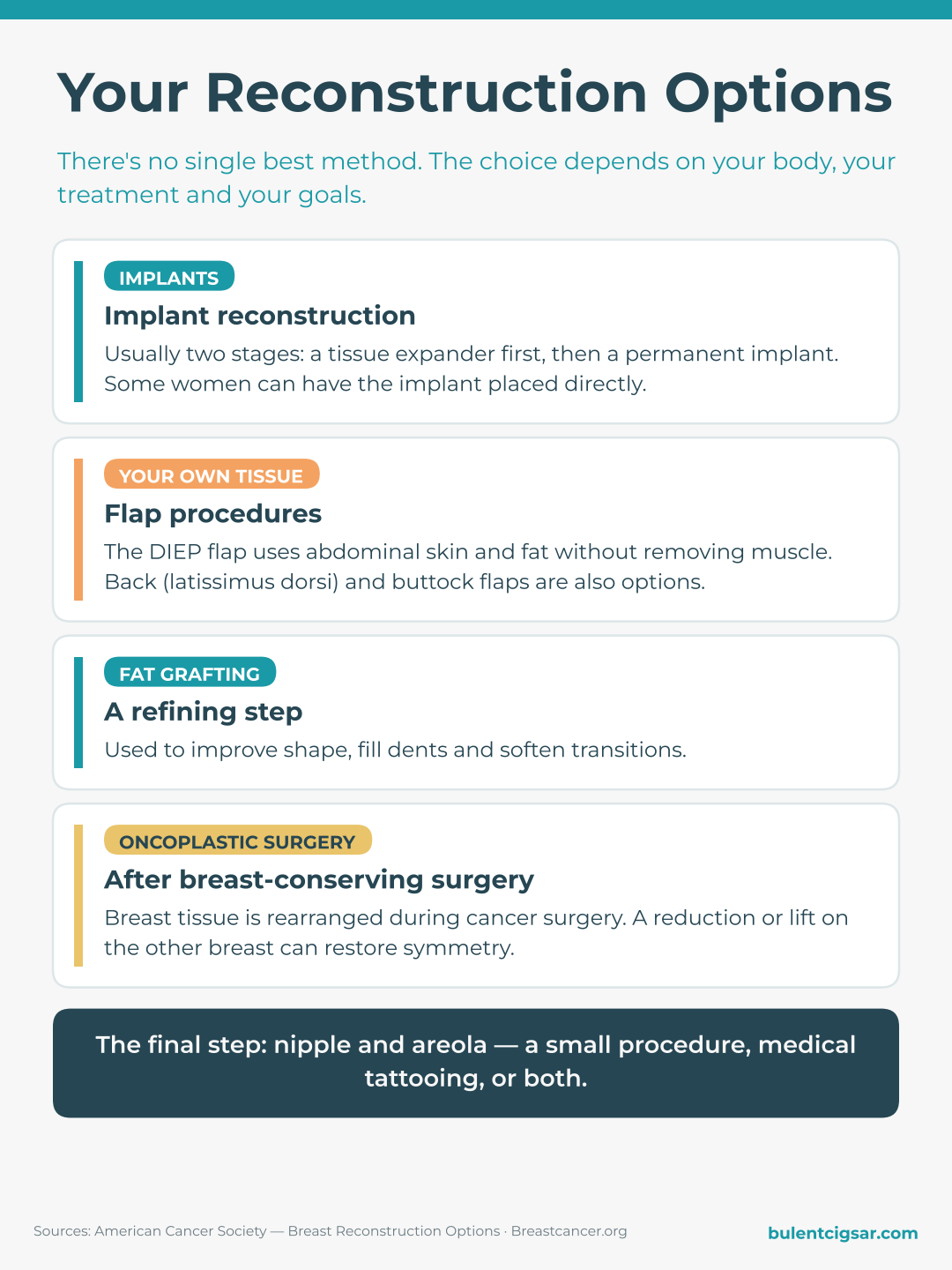
The fear we hear most is that rebuilding the breast might make cancer more likely to return — or harder to spot if it does. The American Cancer Society is unequivocal: studies show that reconstruction does not make breast cancer come back, and if cancer does recur, reconstructed breasts should not cause problems finding or treating it.
Long-term data support that. A study from NYU Langone published in Plastic and Reconstructive Surgery followed patients who had nipple-sparing mastectomy with immediate reconstruction for a median of ten years, and found a recurrence rate of 3.33% per patient.
Now, or later?
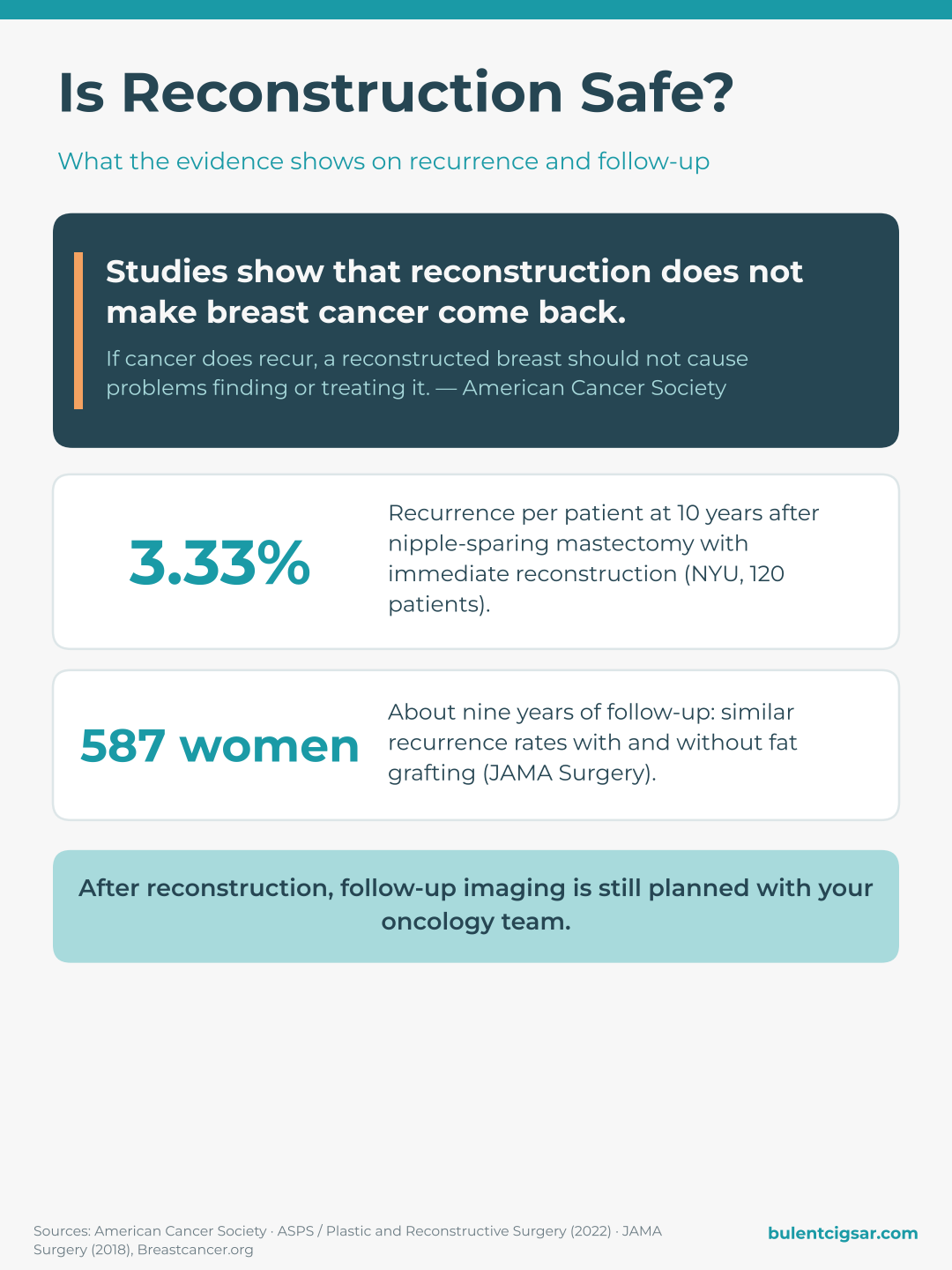
Reconstruction can happen in the same operation as the cancer surgery, or months — even years — afterwards. Both routes have real advantages, and neither is "right" for everyone.
- Immediate reconstruction. You wake up from cancer surgery with a reconstructed breast, and never spend time without one. The trade-off: a longer operation, a longer recovery, and a higher complication risk than mastectomy alone.
- Delayed reconstruction. Waiting can lower the risk of complications, particularly after radiation, and it means you don't have to make big decisions in the middle of treatment. The trade-off: another operation and another recovery later.
Radiation is usually the deciding factor. According to the ACS, radiation can cause problems such as delayed healing and scarring after implant reconstruction, so women who need it may be better suited to reconstruction using their own tissue.
And one thing worth knowing: there is no deadline. Reconstruction years after mastectomy is entirely possible. In an analysis of more than 1.5 million US mastectomy patients between 2005 and 2017, 32.7% had immediate reconstruction — meaning for most women, the decision is still open after their cancer surgery.

Your options
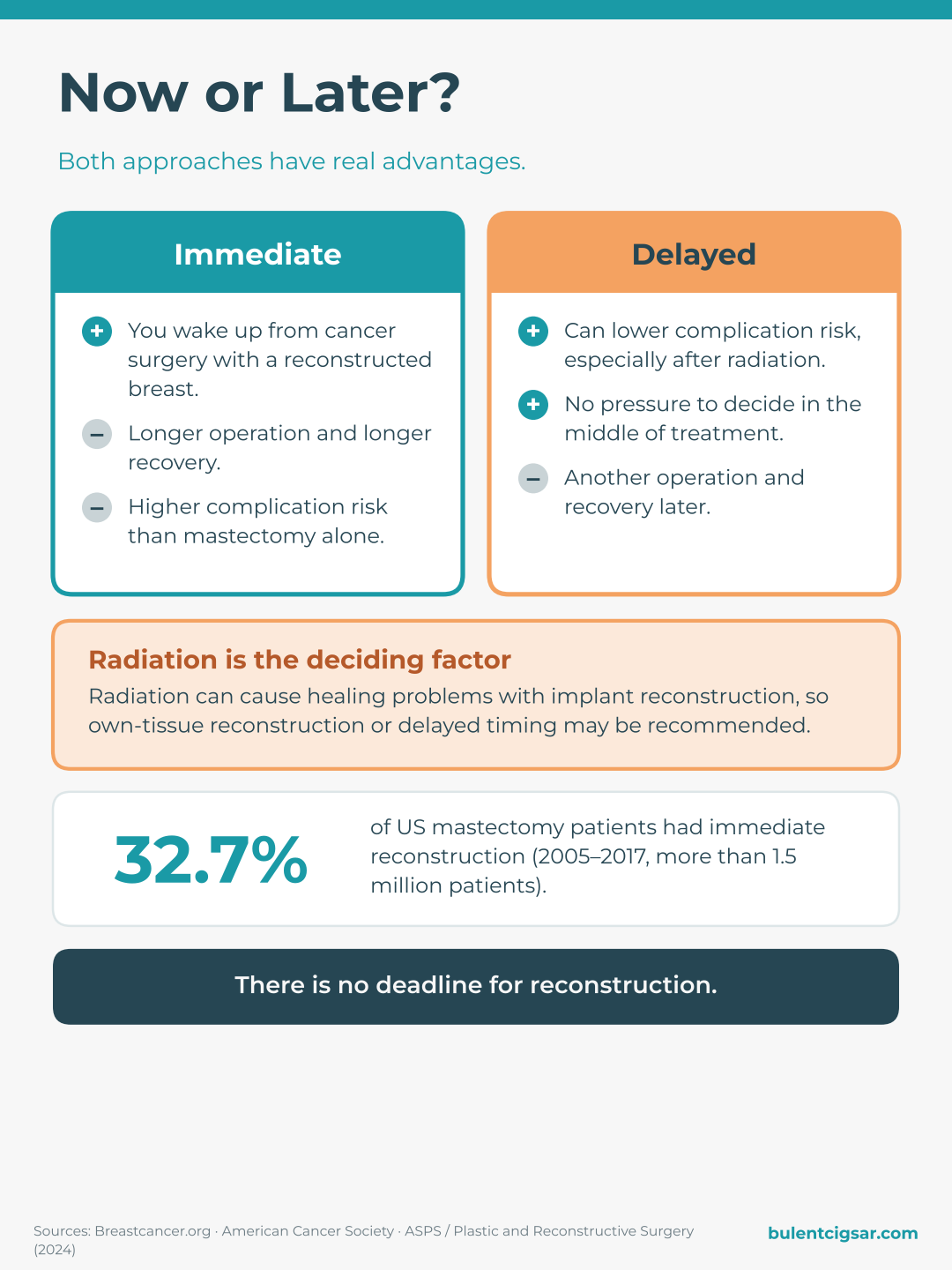
There's no single best method. The choice depends on your body, your cancer treatment, your expectations and your life — and it's made together.
Implant reconstruction
The most common approach. It's usually done in two stages: first a tissue expander — a balloon-like device that starts flat and is gradually filled during clinic visits — is placed to stretch the skin and tissue. A second operation then swaps it for a permanent implant. A smaller number of women can have the permanent implant placed directly at the time of mastectomy. As the ACS reminds patients, implants are not lifetime devices, and further surgery to replace or remove them may be needed over time.
Reconstruction with your own tissue (flap procedures)
Here the breast is rebuilt using skin and fat from another part of your body. The most widely used option is the DIEP flap, which uses skin and fat from the lower abdomen without removing abdominal muscle. Other options include the latissimus dorsi flap from the upper back and flaps from the buttock. According to the ACS, a flap-reconstructed breast often looks and feels more natural than an implant and doesn't need replacing — but the surgery is more complex, recovery takes longer, and there's a second scar at the donor site.
Fat grafting
Your own fat, harvested by liposuction and transferred to the breast, is most often used as a refinement — to improve shape, fill dents and soften transitions. The ACS notes that studies show fat grafting is safe and does not increase the risk of cancer coming back after mastectomy. A Dutch study published in JAMA Surgery that followed 587 women for around nine years found similar recurrence rates with and without fat grafting. The ASPS adds that fat grafting to the reconstructed breast does not delay cancer detection, and experienced radiologists can distinguish oil cysts from suspicious findings.
Nipple and areola reconstruction
Often the final step. The nipple and areola can be recreated with a small surgical procedure, with medical tattooing, or with both.
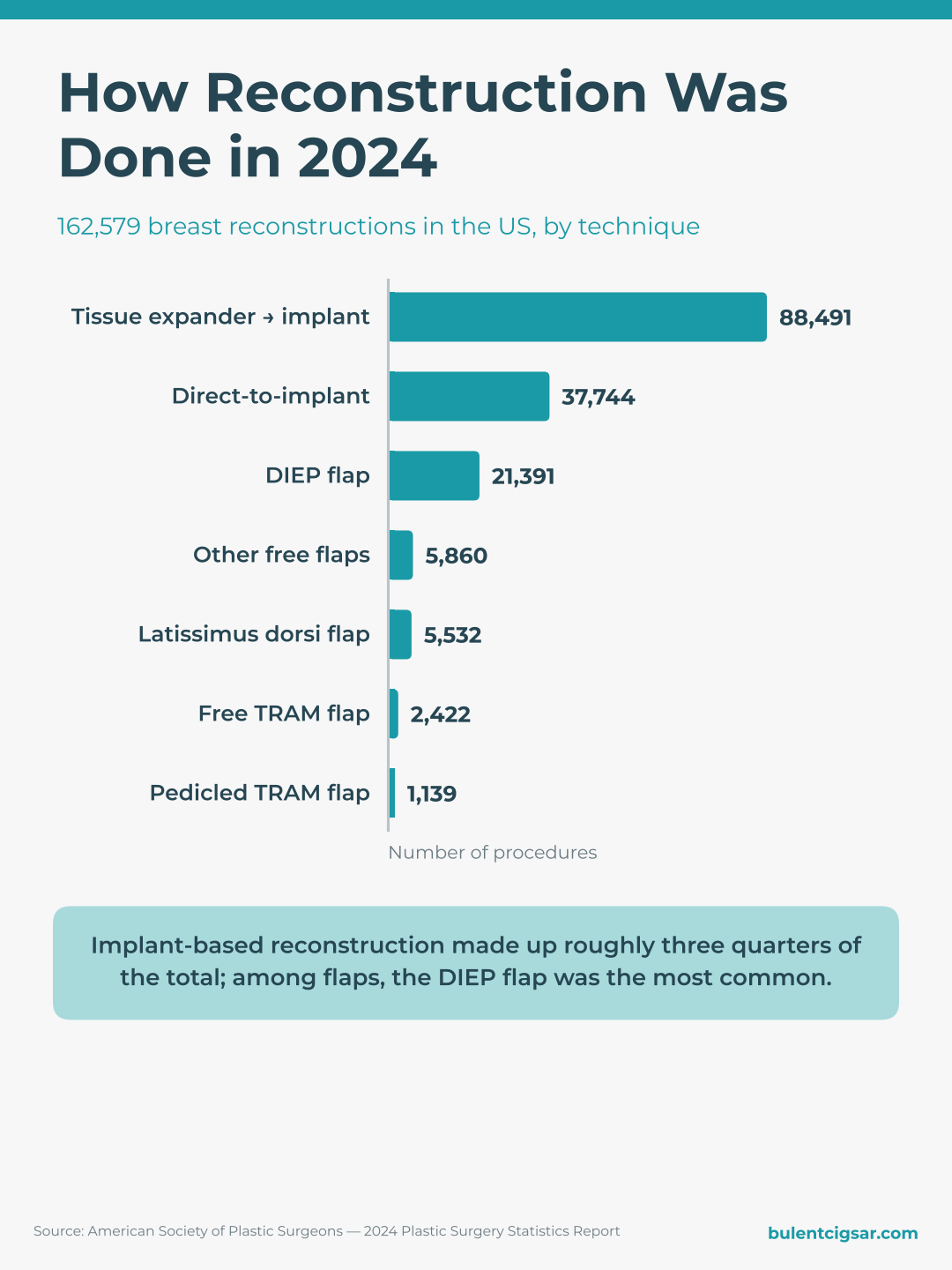
For context on how these options are used, ASPS figures show more than 162,000 breast reconstructions in the US in 2024 — roughly 88,500 using a tissue expander, 37,700 direct-to-implant and 21,400 using a DIEP flap.
After lumpectomy, too
Reconstruction isn't only for mastectomy. After breast-conserving surgery — where only part of the breast is removed — dents, shape changes or a noticeable difference between the breasts can remain.
This is where oncoplastic surgery comes in: cancer surgery and plastic surgery techniques combined, often in the same operation, with breast tissue rearranged to prevent indentations. Where it helps symmetry, a reduction or lift can be performed on the healthy breast too. Fat grafting can add volume, fill dents and soften the look of scars.
What to expect from the result
Success in reconstruction is measured by how women themselves feel. In a large multicentre study published in JAMA Surgery that followed more than 2,000 women, those who had reconstruction with their own tissue reported higher breast satisfaction and better psychosocial and sexual well-being at two years, while satisfaction with implants tended to decline over time. That doesn't make one method better for everyone — but it's a strong argument for talking about the long term before you decide.
Recovery deserves an honest picture too. According to the ACS, most women return to normal activities within 6 to 8 weeks, though full healing can take one to two years. Sensation in a reconstructed breast usually isn't the same as before, but some feeling may return over time. Emotional adjustment takes time as well — and that's entirely normal.
One practical note for readers in the United States: under the Women's Health and Cancer Rights Act, most health plans that cover mastectomy must also cover reconstruction.
How we approach it
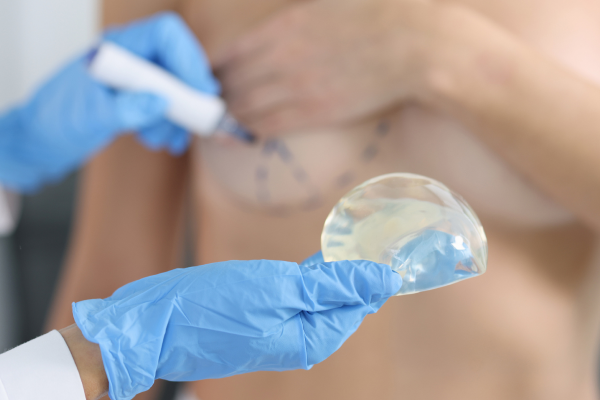
Reconstruction sits at the heart of Dr. Bülent Çığşar's specialty. With more than 25 years in plastic, reconstructive and aesthetic surgery, he treats reconstruction not as a single operation but as a process worked through step by step with the patient.
Timing and technique are planned together with the patient's breast surgeon and oncology team — radiation, chemotherapy schedules, body type and personal goals all shape the plan. For some women, immediate reconstruction is the right call. For others, waiting until treatment is complete leads to a better, safer result.
Dr. Çığşar has been performing fat transfer since 2008, and he brings that experience to refining shape, smoothing transitions and restoring lost volume in reconstruction. Balance between the two breasts is part of the plan from the start; where needed, a reduction or lift on the healthy side is what makes the result whole.
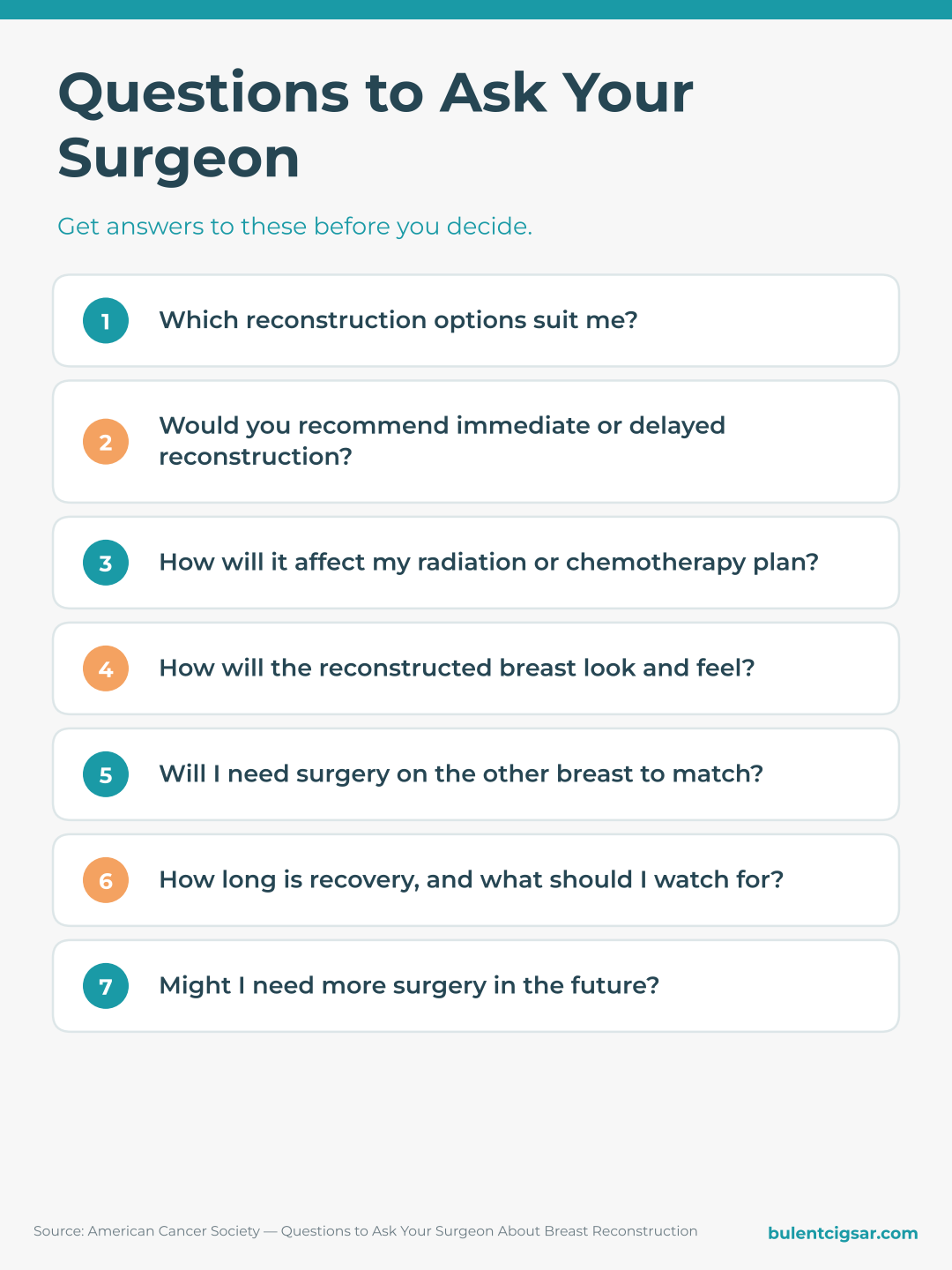
Every option is discussed openly in consultation, with its advantages and its limits. The decision should only be made once you know all of them — and on your terms.
Rebuilding, on Your Terms
Getting through breast cancer is a victory. Reconstruction can be one way of making peace with your body afterwards. Choosing it — or not — is a deeply personal decision. What matters is that it's an informed one.
Whether you've had a mastectomy recently, are still in treatment, or finished years ago, it is never too late to learn what your options are.
Would you like a personalised assessment of the reconstruction options that suit you?
Take the first step — book your free consultation today!
To explore your options and find the right path together, get in touch with us!
🌍 International patients welcome — DM or WhatsApp for an online consultation.
📞 +90 552 452 49 09
FAQ
Does breast reconstruction make cancer come back?
No. According to the American Cancer Society, studies show reconstruction does not make breast cancer come back, and if cancer recurs, a reconstructed breast should not interfere with finding or treating it.
Can I have reconstruction years after my mastectomy?
Yes. Reconstruction can be done at the same time as cancer surgery or months or years later. Delayed reconstruction is often preferred when radiation is part of treatment.
Can I have reconstruction if I need radiation?
Yes, but radiation affects the choice of method and timing. Because radiation can cause healing problems with implant reconstruction, reconstruction using your own tissue or delayed planning may be recommended. The decision is made with your oncology team.
Implants or my own tissue — which is better?
Both have advantages. Own-tissue reconstruction often looks and feels more natural and doesn't need replacing, but the surgery and recovery are longer. Implant reconstruction involves a shorter operation. The choice depends on your body, treatment plan and goals.
Will I have feeling in the reconstructed breast?
Sensation usually isn't the same as before, but some feeling may return over time.
Can the shape be corrected after a lumpectomy?
Yes. Oncoplastic techniques, fat grafting and, where needed, a reduction or lift on the other breast can restore balance.
Do I still need screening after reconstruction?
Yes. Follow-up imaging is planned by your oncology team according to the type of surgery you had. If silicone implants were used, imaging to check implant integrity is added to that plan.
References
- American Society of Plastic Surgeons — 13 Years of Empowering Patients: Annual Breast Reconstruction Awareness Day (2024)
- American Society of Plastic Surgeons — Survey: Many U.S. Women Lack Basic Information on Life After Mastectomy (2022)
- American Cancer Society — Breast Reconstruction Surgery
- American Society of Plastic Surgeons — Low Long-Term Risk of Breast Cancer Recurrence After Nipple-Sparing Mastectomy (Plastic and Reconstructive Surgery, 2022)
- Breastcancer.org — When Is Breast Reconstruction Surgery Done?
- American Cancer Society — Breast Reconstruction Using Implants
- American Society of Plastic Surgeons — Rates of Breast Reconstruction After Mastectomy Have Stabilized (Plastic and Reconstructive Surgery, 2024)
- American Cancer Society — Breast Reconstruction Using Your Own Tissues (Flap Procedures)
- American Cancer Society — Breast Reconstruction Options
- Breastcancer.org — Long-Term Results Suggest Fat Grafting Doesn't Increase Recurrence Risk (JAMA Surgery, 2018)
- American Society of Plastic Surgeons — Post-Mastectomy Fat Graft/Fat Transfer Guiding Principles (PDF) (2015)
- American Society of Plastic Surgeons — 2024 Plastic Surgery Statistics Report (PDF)
- Breastcancer.org — Breast Reconstruction After Lumpectomy
- Santosa KB, Qi J, Kim HM, Hamill JB, Wilkins EG, Pusic AL. Long-term Patient-Reported Outcomes in Postmastectomy Breast Reconstruction — JAMA Surgery, 2018;153(10):891-899
- American Cancer Society — What to Expect After Breast Reconstruction Surgery
- American Cancer Society — Questions to Ask Your Surgeon About Breast Reconstruction