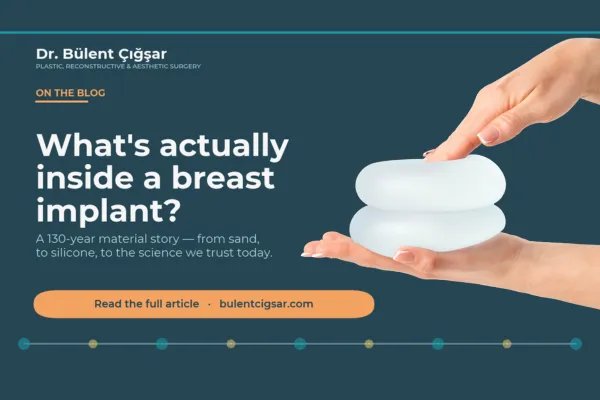
What's Actually Inside a Breast Implant?
The 130-Year Material Story Behind the World's Most Studied Device
A material and scientific history — from ivory and sea sponges to the cohesive gels we trust today, and how a surgeon decides which one belongs in a particular body.
The bag of blood that started everything
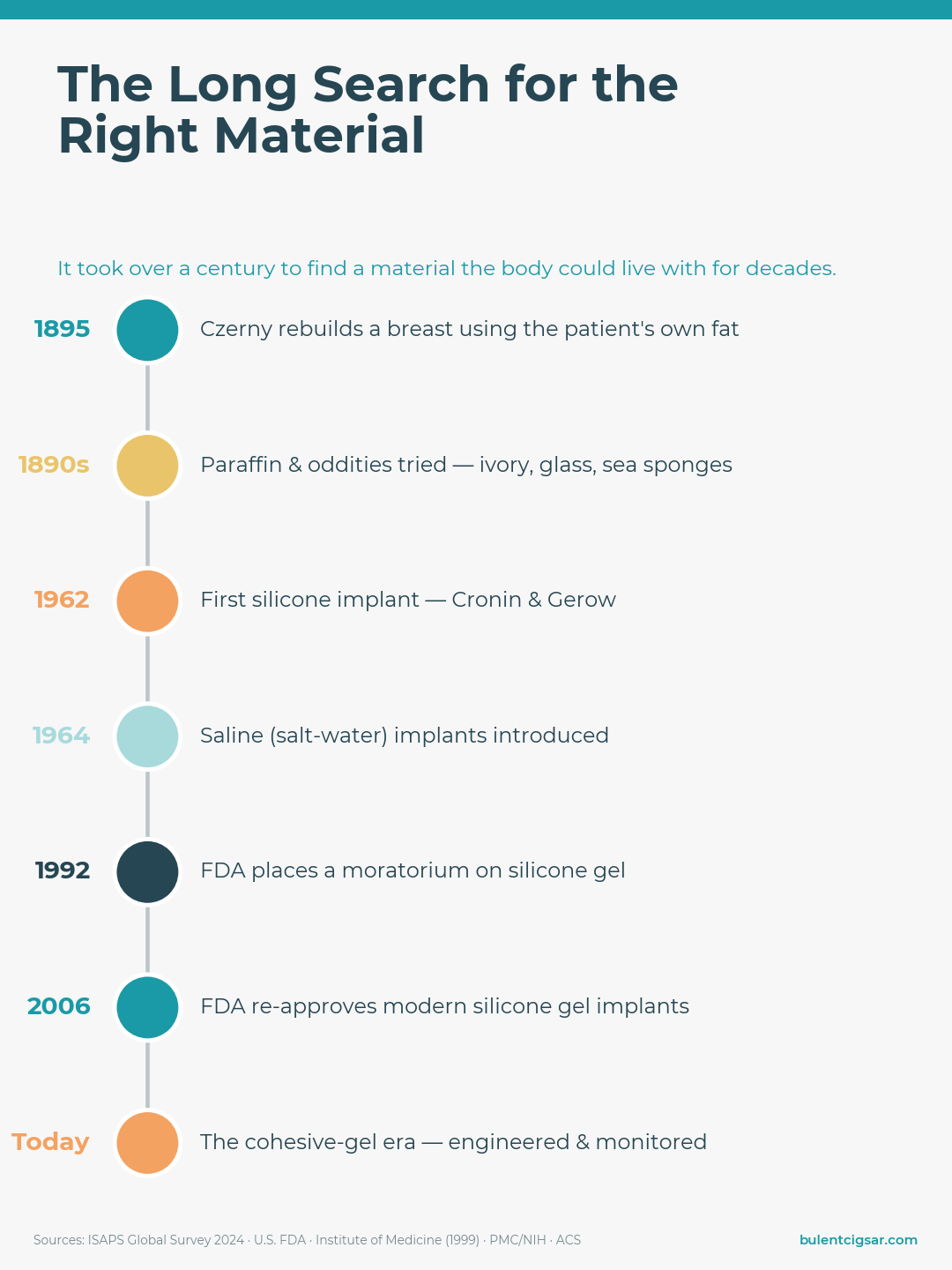
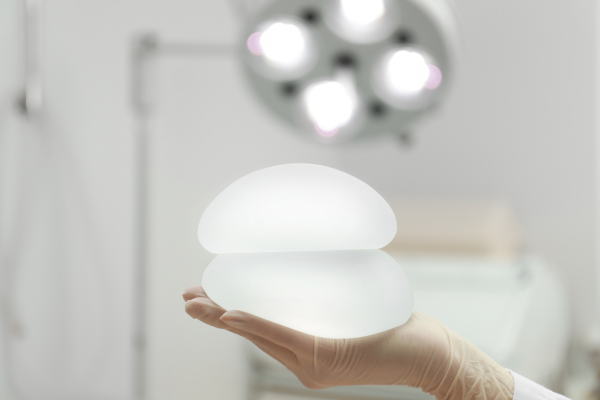
The modern breast implant has an origin story that sounds invented. In Houston in the early 1960s, two plastic surgeons — Thomas Cronin and Frank Gerow — were searching for something no one had managed to build: a material that could sit inside the body for decades and still feel like living tissue. The breakthrough idea, as it is often retold, came from an unlikely object on a hospital shelf. Gerow picked up a plastic bag of donated blood, felt its soft, yielding weight, and recognized something that a century of surgeons had been chasing — it felt remarkably like a natural breast.
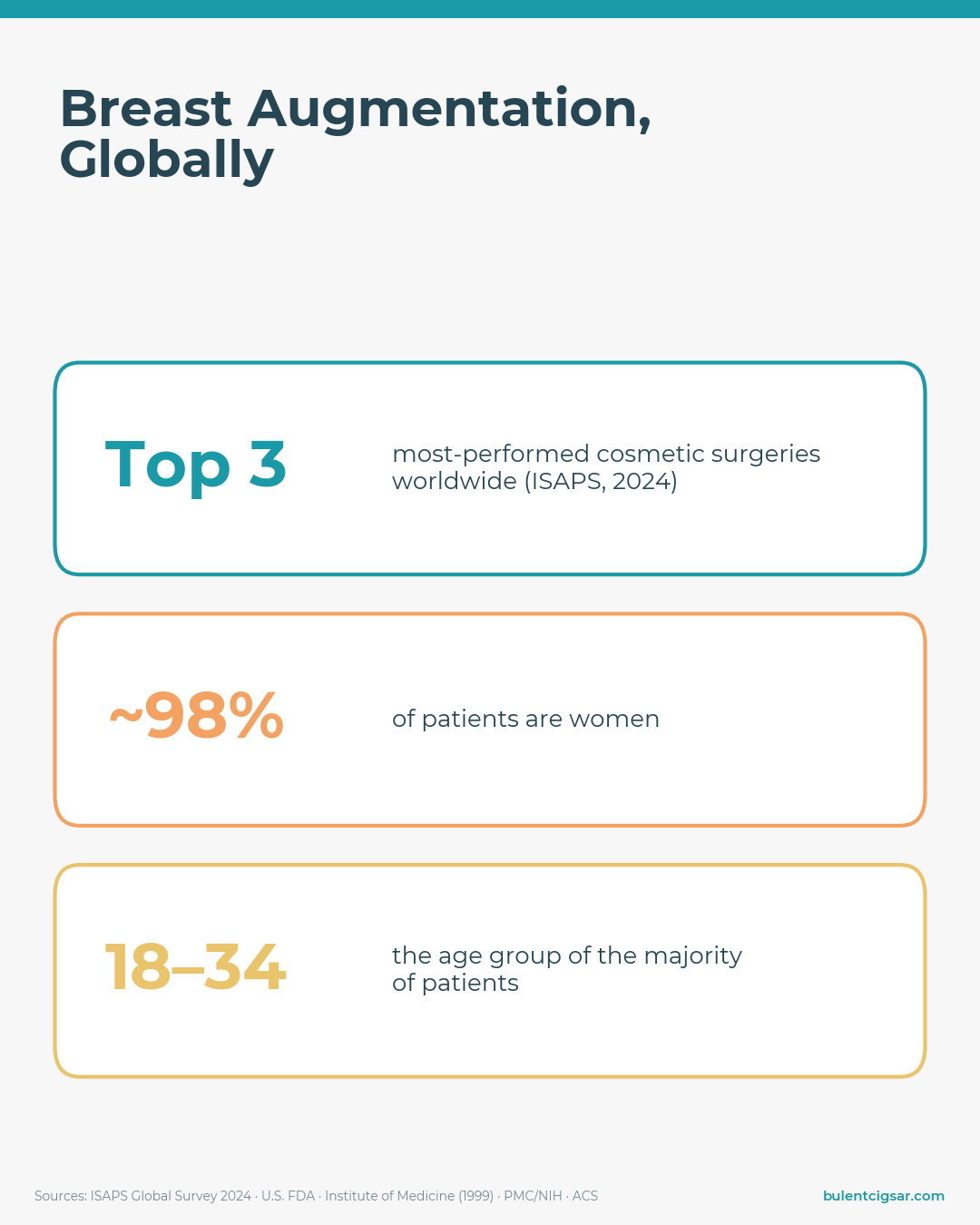
That intuition, combined with a new material from the Dow Corning Corporation, became the first silicone breast implant. They tested an early prototype in a dog named Esmeralda, who tolerated it without trouble and would have kept it longer had she not chewed at her stitches. In 1962, the first human recipient was Timmie Jean Lindsey, a 29-year-old mother of six, who received the Cronin–Gerow device at a Houston hospital. With that single operation, a new branch of surgery was born — and breast augmentation went on to become one of the most requested cosmetic surgeries in the world, performed in women in the overwhelming majority of cases.
But to understand why that 1962 moment mattered so much, you have to know what came before it. Because the search for the right material was long, strange, and at times genuinely dangerous.
A century of getting it wrong
The first recorded breast augmentation predates silicone by nearly seventy years. In 1895, the German surgeon Vincenz Czerny reconstructed a patient's breast after removing a tumor by transplanting a benign fatty growth from her own back. It was elegant in principle — use the body's own tissue — but fat transplanted this way tends to be reabsorbed over time, and the result rarely lasted.
What followed was one of the more unsettling chapters in surgical history. Through the late nineteenth and early twentieth centuries, surgeons tried to enlarge or rebuild breasts with almost anything that held a shape: ivory, glass balls, ground rubber, ox cartilage, wool, and various foam sponges, including a polyvinyl product called Ivalon. Around the 1890s, others injected paraffin wax directly into breast tissue. The results were not just disappointing; they were harmful. Paraffin hardened, broke apart, caused chronic inflammation, lumps, and ulcers, and in the worst cases led to disfigurement and amputation. The injectable approach — including the later, illicit injection of liquid silicone — was a recurring disaster.
The lesson took decades to learn but was, in retrospect, simple: a foreign material sitting loose in living tissue causes problems. What the breast needed was not a substance poured in, but a contained device — something that kept its filler safely sealed away from the body. That is precisely the problem Cronin and Gerow solved.
So what is silicone, really?
Here is where most people's understanding gets fuzzy. "Silicon" and "silicone" are not the same thing, and the difference matters.
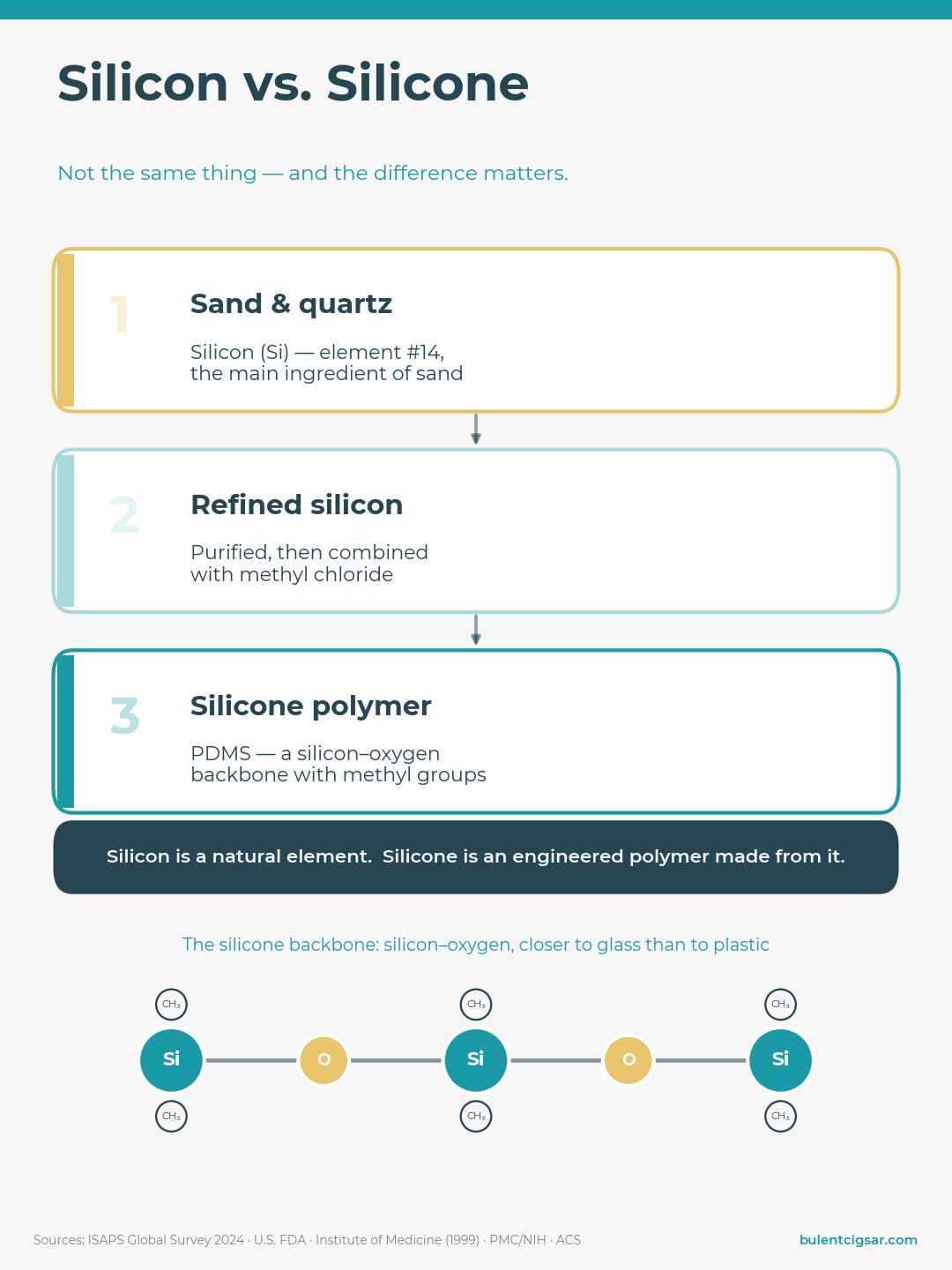
Silicon is a chemical element — number 14 on the periodic table, the second most abundant element in the Earth's crust, and the main ingredient of ordinary sand and quartz. Silicone, by contrast, is a family of synthetic polymers built by humans. The word was coined in 1901 by the British chemist Frederic Kipping. The specific silicone used in implants is polydimethylsiloxane, usually shortened to PDMS — and it is, in a sense, manufactured from sand. The process begins with elemental silicon refined from silica, which is combined with methyl chloride and processed into long, repeating molecular chains.
What makes those chains special is their backbone. Ordinary plastics and rubbers are built on chains of carbon atoms linked to one another. Silicone is built on something different: an alternating chain of silicon and oxygen atoms — a structure chemists call a siloxane backbone, which is closer in spirit to glass than to plastic. Attached to that backbone are small organic groups that keep the material soft, flexible, and water-repellent.
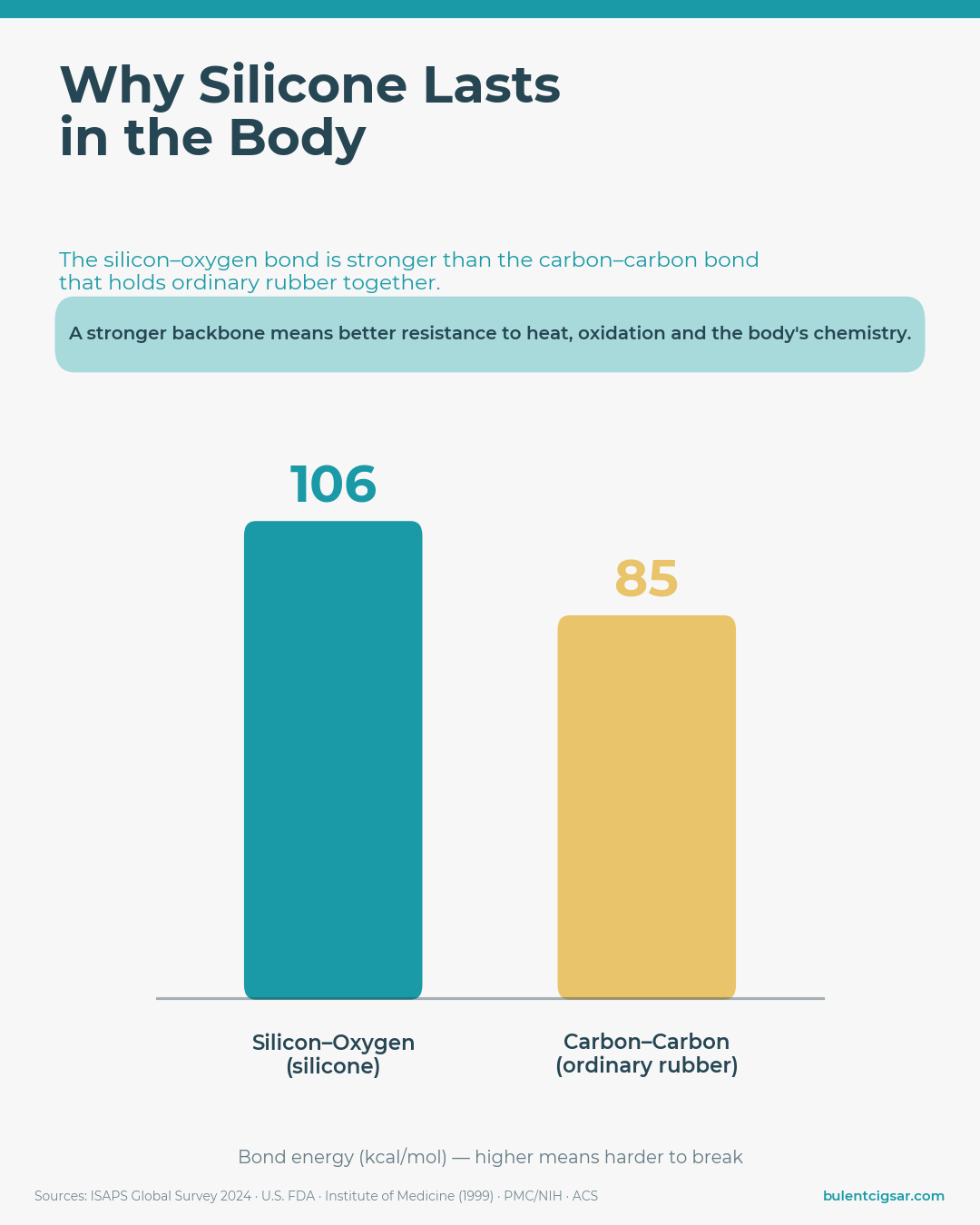
This is also the place to correct a common half-truth. People often say silicone "works like carbon." There is a kernel of truth in it: silicon sits directly below carbon on the periodic table — it is carbon's chemical cousin, and both can form four bonds. But the reason silicone is so durable inside the body has nothing to do with mimicking carbon. It is the opposite. The silicon–oxygen bond is stronger than the carbon–carbon bond that holds ordinary rubber together — roughly 106 kilocalories per mole for silicon–oxygen versus about 85 for carbon–carbon. That single difference is why silicone resists heat, oxidation, and chemical attack far better than organic rubbers, and why it can stay stable in the warm, salty, chemically active environment of the human body for many years.
Why silicone won?
Strength is only half the story. A material can be tough and still be a terrible idea to implant. Silicone earned its place for a combination of properties that, taken together, almost no other material offered:
It is biologically inert. Because that siloxane backbone is so hard to break, the body's chemistry largely leaves it alone. It does not readily react, corrode, or dissolve.
It is hydrophobic and stable. It repels water and resists the oxidation that degrades other materials over time.
It is tunable. By adjusting the length and cross-linking of the chains, the same basic chemistry can be made into a thin oil, a soft gel, or a firm rubber. This is why a single material family can form both the shell of an implant and the gel inside it.
It feels right. Of all the candidates a century of surgeons tried, a properly engineered silicone gel comes closest to the softness and movement of natural breast tissue.
It is worth knowing that silicone is not exotic. The same chemistry shows up in contact lenses, medical tubing, joint implants, the antifoaming agents in everyday medicines, skincare, and even children's putty toys. The breast implant is simply one of its most carefully engineered medical forms.
This does not mean implants are risk-free, and a good clinic never pretends otherwise. The condition that deserves the most careful, honest framing is BIA-ALCL (breast implant–associated anaplastic large cell lymphoma) — and it is worth slowing down here, because this is a topic where headlines tend to outrun the facts.
A few things are important to hold together at once. First, it is rare, and the risk is tied almost entirely to the surface of the implant: estimates range from roughly 1 in a few thousand for the highest–surface-area textured devices down to around 1 in 60,000 for lower-texture implants, and no case has ever been reported with a history of smooth implants alone. Second, it is not really a "silicone problem," nor even uniquely a breast problem: BIA-ALCL is best understood as a response to chronic irritation and inflammation around a textured foreign surface, and comparable lymphomas have been described around other implanted devices elsewhere in the body — orthopedic, gluteal, and other prostheses. Third, when it is caught early it is highly treatable, often cured by removing the implant and its capsule. It was significant enough to prompt the worldwide withdrawal of one high-texture product line in 2019, and it is one of the reasons smooth-surfaced implants are so widely used today.
In candor, exactly how this should be discussed in the consultation room is still debated among surgeons — there isn't yet full consensus on the script. But the evidence-based message is reassuring rather than alarming: a rare, surface-linked, treatable condition, essentially absent with the smooth devices that dominate modern practice. Separately, some patients describe a cluster of self-reported symptoms often called breast implant illness (BII), which the medical community takes seriously and continues to study even though a single biological mechanism has not been established. Regulators now require clearer patient information so that anyone considering implants can make a truly informed decision. Naming all of this openly is not a weakness of the field — it is the mark of a profession that learned from its own history.
The modern menu: what your choices actually are
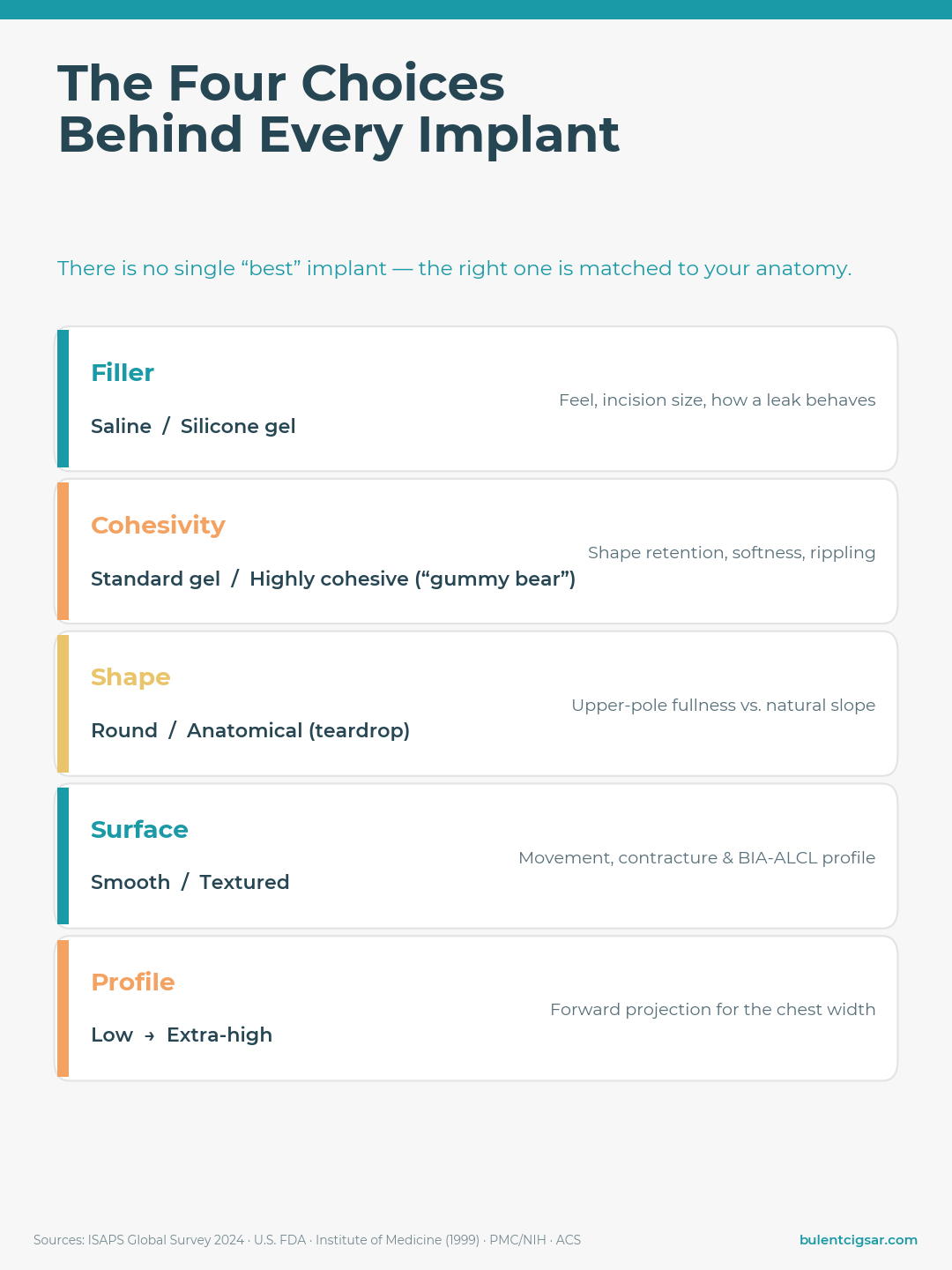
The implant of 2026 is the product of five generations of refinement. The earliest devices had thick shells, firm gel, and high rates of hardening (capsular contracture); each generation improved the shell barrier and the gel. Today, the decisions come down to four main variables — and each one has real consequences for the result.
Filler: saline or silicone gel. Saline implants are a silicone shell filled with sterile salt water, usually inserted empty and filled during surgery, which allows a smaller incision; if they leak, the body simply absorbs the harmless saline and the deflation is obvious. Silicone gel implants come pre-filled and are widely preferred for feeling more like natural tissue.
Cohesivity: how the gel holds together. Modern silicone gel is cohesive — it sticks to itself rather than running like a liquid. The firmest, most cohesive versions are the so-called "gummy bear" or form-stable implants, which hold their shape even if the shell is breached. Greater cohesivity means better shape retention and less rippling, at the cost of a slightly firmer feel and a slightly longer incision, since a pre-formed gel cannot be inserted empty.
Shape: round or anatomical. Round implants give more upper-pole fullness and are symmetrical, so rotation doesn't matter. Anatomical ("teardrop") implants are fuller at the bottom to echo the natural slope of the breast — but because rotation would distort them, they are typically textured to grip the tissue.
Surface: smooth or textured. Textured shells were designed to anchor the implant and reduce movement and capsular contracture; smooth shells move more freely and feel softer. Surface texture is also at the center of the BIA-ALCL discussion, which has shifted much of the field toward smooth implants.
Profile. On top of all this sits projection — low, moderate, high, and extra-high profiles — which determines how far the implant projects forward for a given base width, and is matched to the dimensions of the individual chest.
How the right implant is actually chosen
Here is the part the internet tends to get wrong. There is no single "best" implant — and any clinic that names one before meeting you is selling, not advising. The right device is the one that fits a specific body, a specific tissue quality, and a specific goal.
This is where our approach begins, and where Dr. Çığşar's experience matters most. Before any decision about material, we spend real time understanding what a patient wants and how they want to feel afterward. From there, Dr. Çığşar reads the anatomy that the patient can't see in the mirror — the width of the chest, the thickness and quality of the existing tissue, the position of the breast fold, the natural asymmetries that everyone has — and selects the implant and the surgical plane to match it. The same goal can call for completely different devices in two different people.
Across more than 25 years of practice, the throughline has been consistency rather than trend-chasing: prioritizing natural-looking proportions, choosing premium cohesive-gel implants from manufacturers with long safety records, and planning incisions to keep scarring as discreet as possible. The material science is the foundation — but it is judgment, not the catalogue, that turns a good implant into a good result.
There is a reason Turkey now sits alongside the United States and Brazil as one of the world's leading destinations for aesthetic surgery. Istanbul in particular has become a hub where international standards of training, technology, and device selection meet genuine surgical depth — and where patients from across Europe, the Middle East, and beyond travel specifically for that combination of expertise and care.
For an international patient, the material story in this article is not academic. The implant you choose will travel home in your body and stay there for many years. Understanding what it is made of, why it is safe, and how it was chosen for you specifically is the foundation of trust — and that conversation is exactly where good care starts.
The breast implant is, quietly, one of the most studied medical devices ever made. Its journey — from ivory and sea sponges, through a hospital blood bag, to a glass-stable polymer engineered from sand — is really a story about a single question that took a century to answer: what material can the human body live with comfortably for decades? Silicone answered it. The rest is judgment, anatomy, and the honest conversation between a patient and a surgeon.
Dr. Bülent Çığşar, with over 25 years of experience, continues to practice plastic, reconstructive, and cosmetic surgery in Istanbul. If you have any questions about breast augmentation or breast lift procedures, please contact us or schedule an online consultation.
Check out our other articles on breast aesthetics:
Breast Augmentation & Mastopexy: Combined in One Surgery
Combined Body Contouring: Safety, Recovery & Results
Why International Patients Choose Turkey for Premier Aesthetic Surgery
For more information, please contact us via DM or WhatsApp.
FAQ
What are breast implants actually made of? Every modern breast implant has an outer shell made of silicone elastomer. Inside, it is filled either with sterile saline (salt water) or with silicone gel. The silicone itself is a polymer called polydimethylsiloxane (PDMS), built on a silicon–oxygen backbone.
Is silicone the same as the silicon in sand? No. Silicon is a natural element and the main component of sand and quartz. Silicone is a synthetic polymer engineered from refined silicon. Implant-grade silicone is medical-grade PDMS, valued for being stable, flexible, and biologically inert.
Are silicone breast implants safe? Modern silicone gel implants are among the most studied medical devices. After a 1990s safety scare, the U.S. Institute of Medicine concluded in 1999 that there was no convincing link to connective-tissue or autoimmune disease, and the FDA re-approved them in 2006. They are not risk-free — rare conditions such as BIA-ALCL (linked to certain textured implants) exist — which is why device choice and informed consent matter.
What is the difference between saline and silicone implants? Saline implants are filled with salt water and inserted empty, allowing a smaller incision and an obvious sign if they leak. Silicone gel implants come pre-filled and are generally preferred for feeling more like natural breast tissue.
What are "gummy bear" implants? "Gummy bear" is the nickname for highly cohesive, form-stable silicone gel implants. The gel is firm enough to hold its shape even if the shell is breached, which improves shape retention and reduces rippling.
How is the right implant chosen? There is no universally best implant. The right one is matched to the individual's chest dimensions, tissue quality, and aesthetic goals during consultation. The surgeon selects the filler, cohesivity, shape, surface, and profile to fit that specific anatomy.
REFERENCES / SOURCES
International Society of Aesthetic Plastic Surgery (ISAPS). Global Survey 2024: Full Report and Press Releases.
Institute of Medicine (US) Committee on the Safety of Silicone Breast Implants. Safety of Silicone Breast Implants (1999). National Academies Press.
U.S. FDA breast-implant regulatory history (1992 moratorium; 2006 approval; BIA-ALCL) — overview.
The Evolution of Breast Implants — PMC / NIH.
History of breast implants: Back to the future — JPRAS Open (2022).
The Embryo Project Encyclopedia — The Development of Silicone Breast Implants.
American Chemical Society — Polydimethylsiloxane (PDMS).
Silicone — bond energy & chemical stability — ScienceDirect Topics.
Lipworth L, et al. — Silicone breast implants and connective tissue disease: no association — PubMed.
Current risk of BIA-ALCL: a systematic review — PMC / NIH; ASPS BIA-ALCL summary.